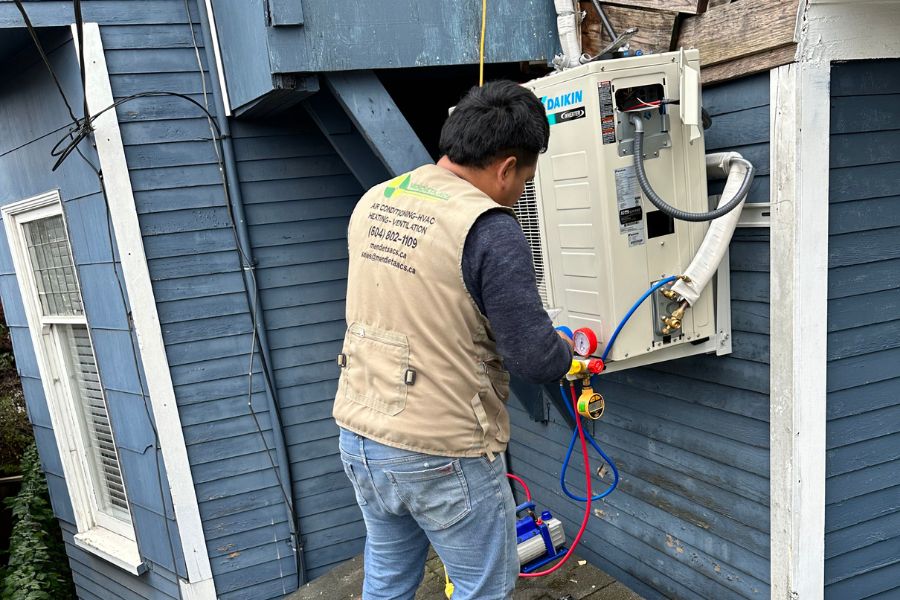
Heat pumps have become an increasingly popular choice for homeowners looking for an efficient way to heat and cool their homes throughout the year. Unlike traditional heating systems that generate heat, heat pumps transfer heat from one location to another, allowing them to provide both heating and cooling from the same system.
However, even the most advanced heat pump needs regular care to perform at its best. Proper heat pump maintenance can help improve energy efficiency, maintain indoor comfort, reduce the risk of unexpected breakdowns, and extend the useful life of your equipment.
For homeowners in Vancouver, Coquitlam, Burnaby, Surrey, and throughout the Lower Mainland, seasonal weather can put your heating and cooling system to the test. Rain, moisture, debris, changing temperatures, and prolonged periods of operation can all affect heat pump performance.
The good news? Many heat pump maintenance tasks are simple, while professional preventative maintenance can identify potential problems before they turn into expensive repairs.
In this guide, we’ll cover 10 practical ways to improve heat pump efficiency and extend its lifespan.
Why Is Heat Pump Maintenance Important?
A heat pump is a sophisticated HVAC system containing electrical components, fans, coils, refrigerant circuits, controls, filters, and other components that need to work together properly.
When the system becomes dirty, airflow is restricted, components begin wearing out, or a mechanical issue develops, the heat pump may need to work harder to maintain the desired indoor temperature.
Regular maintenance helps keep these components operating properly.
According to Natural Resources Canada, regular maintenance is important for efficient and reliable heat pump operation, and homeowners should have a qualified contractor perform maintenance annually. NRCan also recommends cleaning or replacing air filters regularly and ensuring vents and registers aren’t blocked.
For homeowners, the benefits of routine heat pump maintenance can include:
Improved heating and cooling performance
Better energy efficiency
More consistent indoor temperatures
Improved airflow
Reduced likelihood of unexpected breakdowns
Longer equipment service life
Early detection of developing problems
Better overall comfort
Potentially lower operating costs
Maintenance is particularly important because your heat pump may operate for long periods during both the heating and cooling seasons.
10 Ways to Improve Heat Pump Efficiency and Extend Its Lifespan
1. Clean or Replace Your Air Filter Regularly
One of the easiest and most important heat pump maintenance tasks is keeping the air filter clean.
A dirty or clogged filter restricts airflow through the system. When airflow is reduced, your heat pump may have to work harder and run longer to maintain the temperature you’ve selected.
Natural Resources Canada recommends changing or cleaning heat pump air filters approximately every three months, although the ideal schedule can vary depending on the equipment, filter type, household conditions, pets, and manufacturer recommendations.
How often should you change a heat pump filter?
A three-month interval is a useful general guideline, but don’t simply rely on the calendar.
Check the filter regularly and replace or clean it according to the manufacturer’s instructions.
You may need to check it more frequently if:
You have pets
Someone in the home has allergies or sensitivities
Your home experiences significant dust
The system operates frequently
Renovation work is taking place
The filter becomes visibly dirty
A clean filter supports proper airflow and helps your heat pump operate efficiently.
2. Keep the Outdoor Unit Clear of Debris
Your outdoor heat pump unit needs adequate airflow to transfer heat effectively.
Leaves, branches, grass clippings, dirt, snow, and other debris can accumulate around the outdoor unit and restrict airflow.
Take a few minutes to visually inspect the area around your outdoor unit regularly.
Keep the area around your heat pump clear
As a general rule, keep vegetation and stored items away from the outdoor unit and make sure nothing is obstructing the airflow.
During winter, pay particular attention to snow and ice accumulation.
Do not try to forcefully break ice from components or use aggressive cleaning methods that could damage the equipment. If you notice excessive ice buildup or the unit isn’t operating normally, contact a qualified HVAC technician.
Good airflow is essential for efficient heat pump operation.
3. Schedule Professional Heat Pump Maintenance Annually
DIY maintenance is useful, but it doesn’t replace professional HVAC service.
A qualified technician can inspect components that homeowners generally shouldn’t attempt to service themselves.
An annual heat pump maintenance visit can include checking the system’s overall operation, inspecting electrical and mechanical components, examining airflow, checking coils and other components, and identifying signs of wear or developing problems.
Natural Resources Canada recommends annual professional maintenance for heat pumps to help ensure they remain efficient and reliable.
Why professional heat pump maintenance matters
Small problems can become larger problems when they’re ignored.
For example, an airflow issue, electrical problem, unusual operating condition, or component beginning to fail may initially produce only a subtle symptom.
A professional inspection can help identify these issues before they result in a major breakdown.
For homeowners who depend on their heat pump for both heating and cooling, preventative maintenance can provide valuable peace of mind.
4. Keep Indoor Vents and Registers Unblocked
Your heat pump can only distribute conditioned air effectively if air can move freely through your home.
Furniture, rugs, curtains, boxes, and other household items can accidentally block vents and registers.
Restricted airflow can affect comfort and may cause your system to work harder than necessary.
Improve airflow throughout your home
Walk through your home and check that supply vents and registers are open and unobstructed.
Avoid placing large furniture directly over or in front of vents.
If certain rooms consistently feel too warm or too cold, don’t simply increase or decrease the thermostat repeatedly. Uneven temperatures can sometimes indicate airflow, ductwork, insulation, thermostat, or equipment issues.
A professional HVAC inspection can help determine the underlying cause.
5. Keep the Indoor and Outdoor Coils Clean
Heat pumps rely on heat exchangers and coils to transfer heat between the indoor and outdoor environments.
When coils become dirty, heat transfer can become less effective.
The result can be reduced system performance and increased workload on the equipment.
Why coil cleaning matters
Outdoor coils can accumulate dirt and organic debris, while indoor components can collect dust over time.
Some light cleaning around accessible areas may be appropriate depending on your system and manufacturer’s instructions. However, internal cleaning and servicing should generally be left to a qualified HVAC professional.
Improper cleaning techniques can bend delicate fins or damage electrical components.
If you notice visible dirt buildup, reduced airflow, unusual operation, or declining performance, consider scheduling professional heat pump service.
6. Use Your Thermostat Strategically
How you operate your heat pump can affect both comfort and efficiency.
Heat pumps are designed to provide efficient heating and cooling, but constantly making large thermostat adjustments may not always be the best operating strategy.
Instead, use a comfortable and consistent temperature strategy appropriate for your home and your heat pump’s controls.
Instead, use a comfortable and consistent temperature strategy appropriate for your home and your heat pump’s controls.
Avoid constantly changing the temperature
If you’re frequently turning the system up, turning it down, switching modes, and making significant temperature adjustments, your heat pump may have to respond to changing demands repeatedly.
Modern heat pumps, particularly variable-capacity systems, are designed to adjust their output based on heating or cooling demand. Using the controls as recommended by the manufacturer can help the system operate as intended.
If you’re unsure about the ideal thermostat settings for your specific heat pump, ask your HVAC professional.
7. Make Sure Your Home Has Good Insulation and Air Sealing
Your heat pump isn’t the only factor affecting energy efficiency.
Your home itself plays a major role.
If conditioned air escapes through gaps around doors and windows, or if your home has insufficient insulation, your heat pump may need to operate longer to maintain comfortable indoor temperatures.
Natural Resources Canada recommends considering air leakage and insulation improvements to maximize the benefits of a heat pump.
How insulation affects heat pump performance
Think of your home as part of the heating and cooling system.
Good insulation helps slow heat transfer through the building envelope, while proper air sealing reduces unwanted air leakage.
Potential areas to investigate include:
Improving the building envelope can reduce the heating and cooling load placed on your heat pump.
8. Don’t Ignore Strange Noises, Odours, or Performance Changes
Your heat pump may provide warning signs when something isn’t operating correctly.
Don’t ignore changes in how your system sounds, smells, or performs.
Potential warning signs can include:
Unusual rattling or grinding sounds
Persistent buzzing
Strange odours
Reduced heating performance
Reduced cooling performance
Poor airflow
Frequent cycling
Unexplained increases in energy consumption
Excessive or unusual ice buildup
The system struggling to maintain the desired temperature
Early repairs can prevent bigger problems
Not every unusual noise or temperature change means a major failure is occurring.
However, investigating problems early can help prevent a minor issue from developing into a more expensive repair.
If your heat pump isn’t performing the way it normally does, contact a qualified HVAC technician for diagnosis rather than continuing to operate a malfunctioning system indefinitely.
9. Prepare Your Heat Pump for Vancouver’s Changing Seasons
Heat pumps operate year-round, which means seasonal preparation is important.
In the Lower Mainland, homeowners experience a combination of cool and wet winters, mild shoulder seasons, and warmer summer conditions. Your heat pump may therefore switch between heating and cooling duties throughout the year.
Before the heating season
Before temperatures drop, consider:
Checking or replacing the air filter
Inspecting the outdoor unit
Checking for debris around the unit
Confirming vents aren’t blocked
Testing the thermostat
Scheduling professional maintenance if it’s due
Before the cooling season
Before warmer weather arrives:
Check the air filter
Inspect the outdoor unit
Ensure airflow around the outdoor unit is unobstructed
Check indoor vents and registers
Make sure the system is operating normally
Seasonal inspections can help you identify problems before you need your heat pump the most.
10. Know When to Call a Professional
Some heat pump maintenance tasks are homeowner-friendly. Others require specialized HVAC knowledge, tools, and training.
You should contact a qualified technician when your system has a significant performance problem or when servicing involves electrical, refrigerant, mechanical, or internal components.
Professional heat pump service can help with:
Heat pump diagnostics
Heating and cooling performance issues
Electrical problems
Refrigerant-related issues
Unusual noises
Poor airflow
Coil and component inspection
System performance checks
Preventative maintenance
Heat pump repairs
Ductless heat pump service
Installation-related concerns
Trying to repair complex HVAC components without the appropriate training can create additional damage or safety risks.
When in doubt, have the system inspected by a professional.
How Often Should a Heat Pump Be Serviced?
For most homeowners, annual professional heat pump maintenance is a sensible approach.
Natural Resources Canada recommends annual maintenance by a qualified contractor for heat pumps.
However, your ideal maintenance schedule can depend on:
Heat pump type
Equipment age
Manufacturer recommendations
How frequently the system operates
Household conditions
Indoor air quality
Presence of pets
System history
Environmental conditions
Whether the system is used for both heating and cooling
In addition to professional service, homeowners should regularly check filters and airflow throughout the year.
How Long Does a Heat Pump Last?
The lifespan of a heat pump depends on the equipment, installation quality, operating conditions, usage, maintenance history, and other factors.
Natural Resources Canada states that air-source heat pumps generally have a service life of approximately 15 to 20 years. The compressor is one of the most critical components of the system.
Regular maintenance cannot guarantee a specific lifespan, but it can help your system operate under appropriate conditions and may allow developing issues to be identified earlier.
Proper installation is also extremely important.
NRCan notes that correct selection, sizing, and installation are critical to maximizing heat pump performance and energy savings.
What Happens If You Don’t Maintain Your Heat Pump?
Skipping maintenance doesn’t necessarily mean your heat pump will fail immediately.
However, neglect can allow dirt, restricted airflow, wear, and developing mechanical or electrical problems to go unnoticed.
Potential consequences can include:
Preventative maintenance is generally about staying ahead of problems rather than waiting for a complete system failure.
Heat Pump Maintenance Checklist for Homeowners
Use this simple checklist throughout the year:
Monthly or Regularly
Check the air filter.
Look for visible debris around the outdoor unit.
Make sure outdoor airflow isn’t obstructed.
Check that indoor vents and registers are open.
Pay attention to unusual sounds or odours.
Monitor heating and cooling performance.
Every Few Months
Clean or replace the filter according to manufacturer recommendations.
Inspect the outdoor unit more thoroughly.
Check for changes in airflow or comfort.
Look for signs that the system isn’t operating normally.
Annually
Schedule professional heat pump maintenance.
Have the system inspected before the season when you’ll rely on it most.
Discuss recurring performance issues with your HVAC technician.
Review the manufacturer’s maintenance recommendations.
When Should You Repair or Replace a Heat Pump?
Maintenance and repair can help extend the useful life of your heat pump, but eventually every HVAC system reaches the point where replacement makes more sense.
Consider discussing replacement options with an HVAC professional if your system:
Is approaching the end of its expected service life
Requires increasingly frequent repairs
Has a major component failure
Provides inconsistent heating or cooling
Has experienced a significant decline in performance
No longer meets your comfort requirements
Has become increasingly expensive to operate or repair
A professional can evaluate the system’s condition and help you compare repair versus replacement.
Why Professional Heat Pump Maintenance Is Worth It
A heat pump represents a significant investment in your home’s comfort.
Keeping it maintained helps protect that investment.
Professional maintenance isn’t simply about cleaning the equipment. It’s about evaluating the system as a whole and identifying conditions that could affect performance, reliability, safety, and longevity.
For homeowners in the Lower Mainland, having a trusted HVAC company available for preventative maintenance and repairs can make managing your heating and cooling system much easier.
Professional Heat Pump Maintenance in the Lower Mainland
Mendieta ACS provides residential and commercial HVAC services throughout Coquitlam, the Tri-Cities, Burnaby, Vancouver, Surrey, and surrounding Lower Mainland communities. The company offers heat pump installation and repair as well as ductless heat pump installation and repair.
With more than 18 years of HVAC experience, Mendieta ACS focuses on reliable heating, cooling, preventative maintenance, diagnostics, and tailored HVAC solutions. If your heat pump isn’t performing as efficiently as it once did, or if you’re due for preventative maintenance, professional service can help you understand what’s happening before a small issue becomes a major repair.
Keep Your Heat Pump Running Efficiently
Don’t wait until your heat pump stops working to think about maintenance.
Regular filter care, unobstructed airflow, seasonal inspections, proper thermostat use, and professional annual maintenance can all contribute to dependable system performance.
If you need heat pump maintenance, heat pump repair, or ductless heat pump service in the Lower Mainland, Mendieta ACS can help assess your system and recommend the appropriate next steps.
Ready to improve your heat pump’s performance? Contact Mendieta ACS today to schedule professional HVAC service.
Final Thoughts
Your heat pump works hard to keep your home comfortable through changing seasons. Giving it the right care can help maintain performance, improve reliability, and protect your HVAC investment.
The most important steps are simple: keep filters clean, maintain good airflow, keep the outdoor unit clear, use the system properly, address unusual performance quickly, and schedule professional maintenance every year.
If you’re experiencing problems with your current heat pump or want to keep your system operating at its best, professional HVAC maintenance is a smart place to start.
Frequently Asked Questions About Heat Pump Maintenance